
5 Things You Need To Know To Create A Very Successful Lifestyle Brand
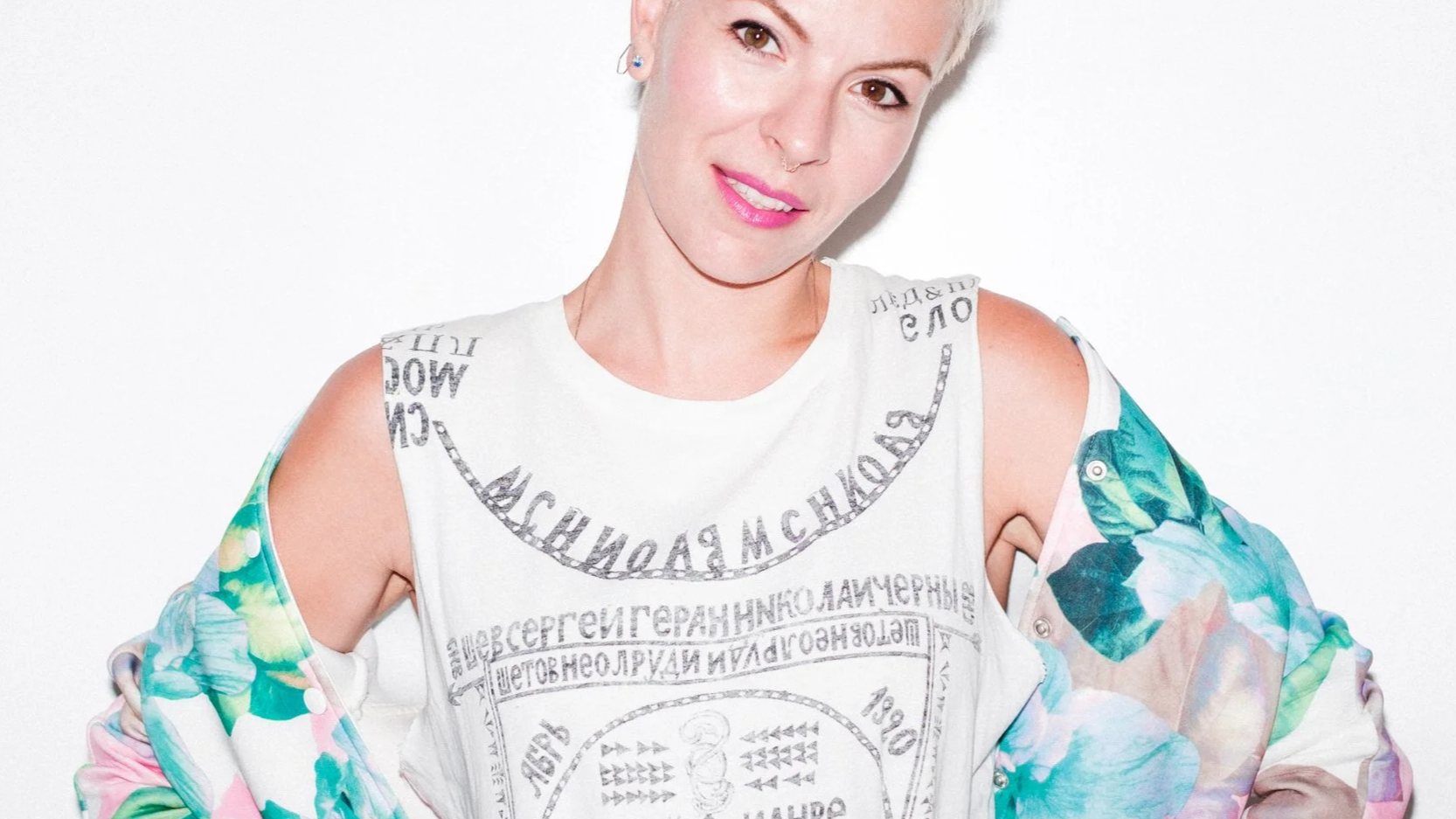
AUTHORITY MAGAZINE: Interview with Kelly Kuhl
Kelly is a multidisciplinary Creative Director and Strategist whose practice spans technology, fashion, culture, and film. A life spent moving between cities and cultures, paired with 10+ years in brand forecasting, has made her fluent in reading rooms, shifting contexts, and finding the thread that makes a brand resonate anywhere. In addition to finding opportunities to flex her creative unicorn skills, she’s also a professional dancer, vintage fashion connoisseur, and Dinosaur aficionado.
Thank you so much for joining us in this interview series! Before we dive in, our readers would love to learn a bit more about you.
Can you tell us a bit about your “childhood backstory”?
I grew up moving from town-to-town across the Canadian Prairies. As a dancer and swimmer from an early age, I was always competing and conditioning. It was a gift to have those stabilizing factors throughout my life. My mom is a creative explosion who naturally pushes at the edges and she instilled that constant curiosity in me. Her side of the family is quirky, but whip smart; I definitely inherited both of those qualities! Despite the social challenges of perpetually being the new kid, I’ve always thrived in creating my own universe. My ability to draw and (eventually) use fashion as a social tool really helped me survive. And I was close to my family. I remember forcing my sister to perform with me in a living-room-re-enactment of the Lion King in head-to-toe costumes I had made us out of construction paper. They were terribly impractical, but the unabashed creativity…! Craft before it was cool.
Can you tell us the story of what led you to this particular career path?
It was an accident, really! I have always been keen on science and my plan was to go into biochemistry, likely genetics or neuroscience. As I was looking at schools, I stumbled on the Alberta University of the Arts, which has close ties to the NY and LA advertising industries. My mom offered to take me to an open house.It was early spring in Canada and roads seemed clear on our drive there. Unfortunately, we hit a patch of black ice and ended up in a crazy car accident. Once we realised we were fine and the car was somehow still driveable, my mom asked if we should continue on to the open house. (We were over an hour late at this point.) We did.
The school felt like I had finally found my home! I didn’t know how to build any functional career through anything the school offered, as it wasn’t science, but I knew I needed to be there. Once in attendance, I kind of stumbled blindly into opportunities, worked very hard, studied histories, and with a combination of charm and dedication, discovered I was good at design.
Can you share a story about the funniest mistake you made when you were first starting? Can you tell us what lesson you learned from that?
Most of the mistakes I made early in my career were not funny. There is a lot of seriousness in being a creative professional because in our current cultural time, it isn’t revered in North America the way finance or an MBA are. So you fight hard. For everything. For respect. To prove that you have real expertise and aren’t painting on your pants and smoking weed all day. To never make a single mistake, ever.
With that context aside, I’ll be vulnerable and tell you about the biggest mistake I made. And nope, it also wasn’t funny. My first contract client was a Brand design for an eldercare facility. I was so excited about it and came back to the client with all these beautiful conceptual directions that I had spent ages on. He didn’t want any of it; he had drawn a literal sketch on a napkin and wanted me to make his sketch into a formalized design. It was a thin idea. I kept trying to fight for a stronger solution, which only made him more frustrated with me. Eventually, I did what he wanted and he (surprise!) hated it, claiming that he hired me to make the idea better and I hadn’t.
Somehow, he paid me for my work and time, then hired another designer. That designer created a logo where the name of the facility sat under the ground, beneath a tree. Like the words had been buried.
For an elder care facility. I learned three things from this experience:
1. Always have a detailed contract in place
2. Taste is a matter of taste
3. Respect is not a requisite to being hired
Is there a particular book, podcast, or film that made a significant impact on you? Can you share a story or explain why it resonated with you so much?
It was a magazine fashion feature. I remember it so clearly. I was a child, probably around 7 years old, living in a town of 1200 people an hour away from anything, called Hanna, Alberta. Somehow I got my hands on a Vogue and the feature fashion spread was an Alice in Wonderland pictorial with photography by Annie Leibovitz. (recent Vogue article) Flipping through the pages, I remember wondering how they got away with creating it. The only people I knew were farmers, firemen, or my dad who managed a local business. It was the first time I realised there were places and people in the world who dreamed and played and made magic. That was the moment my egg cracked open.
Can you please give us your favorite "Life Lesson Quote"? Can you share how that was relevant to you in your life?
"Out of clutter, find simplicity. From discord, find harmony. In the middle of difficulty lies opportunity." - Albert Einstein
I encountered this quote when moving from Trend Forecasting (1–3 year timeline) to Futurism (10–20 year timeline). It was really right for the headspace I was in at the time; trying to build the muscles of future visioning with accuracy. I was finding myself in a life season of discord, bogged down in the difficulties in our cultural reality and missing the cues that had legs enough to grow into large, industry-defining movements. There is something about the way this quote is worded that continues to resonate with me: offering simplicity as a counterpoint to noise, a symbiosis as a counterpoint to chaos… it gives me permission to innovate in braver ways.
Ok, thank you for that. Let’s now jump to the primary focus of our interview. For the benefit of our readers, let's define our terms.
How do you define a Lifestyle Brand?
Lifestyle Brand resonates with a person’s lifestyle by selling identity, values, or aspirations. It can be broad, providing products for that lifestyle, like Nike, Dover Street Market, Erewhon, or Goop, or targeted to lifestyle or access, like Soho House, Sidebar, or Zero Bond NY/LA.
How is a Lifestyle Brand different from a normal, typical brand?
In order for it to work, a Lifestyle Brand needs to lead with its ethos. In product-based brands (digital, physical or otherwise), the focus could be a single product or operational feature, burying the lead on the ethos. Often this single-source-of-truth is dressed in a clear and comprehensive visual language which helps with audience identification and cool factor.
What are the benefits of creating a lifestyle brand?
As long as the Brand provides relevance, there is no overhead linked to the product. The barrier to entry is much lower for business builders. Arguably, you could launch and start profiting from a successful Lifestyle Brand within a week. Anchoring in values, as opposed to products, also means more potential reach and play. A single lifestyle Brand could touch multiple product category once (Virgin).
In your opinion, what is an example of a company that has done a fantastic job building a believable and beloved Lifestyle Brand? What specifically impresses you? What can one do to replicate that?
The most compelling Brands are not often also universally beloved. One that seems to be universally liked is Airbnb. Despite the mini-controversaries, I’ve enjoyed watching Airbnb evolve. I’ve seen various iterations of their Brand books and they always root in their values. (It definitely helped that two thirds of their founding members' squad were design-thinkers.) They have gone from the peculiar notion of letting strangers stay in your house to themed life experiences, staycations, and globally remote work.
Their rebrand was exceedingly charming, which I rarely get to say, and all around improved the clarity with which they presented themselves. Most people I know have stayed in multiple Airbnb’s, or if they haven’t, they understand me if I reference them. (Note that I am using the Brand name as a noun, instead of saying bed and breakfasts accommodations through Airbnb.)
Every touch point of their amorphous Brand is thought through,, which is highly significant considering their “Brand” actually consists of 9 million strangers homes (listings). Staggering, really. Advertising from Airbnb is often more lo-fi than high, keeping with a layer of personalization, innocence, and craft. Their UX is thoughtful and minimal, letting users interact and collect. Privacy and safety are present, but delicately massaged through experiences. I’ve even met quite a few employees of the headquarters that report working there is fantastic.
Can you share your ideas about how to create a lifestyle brand that people really love and are ‘crazy about’?
Trying to do everything for everyone will not work. Especially in our current cultural climate (globalism, ai and social media wiping away uniqueness while granting access to free-range, unmitigated, individual expression), people want to feel special. Seen. Listened to. Like they matter. The way to access audiences is to stand for something distinctive and stick by it. Often, the more obscure the better! I understand this seems counterintuitive: sell to everyone by selling to one, peculiar person? The truth is, one, peculiar person is never just one, peculiar person. Specifics matter.
What are the common mistakes you have seen people make when they start a lifestyle brand? What can be done to avoid those errors?
Trying to be too appeasing is a common mistake. I’ve often seen Brands start in a great place, rich with individuality and barely understanding that they have created something so unique and salable! Then, as their popularity grows, they are influenced by customers with sway (re: money) who ask them to add this, change that, sell this, expand this-thing-that-they-really-like. Three years later, the creator is selling socks, access to a digital coaching platform, and vacation rentals, and doesn’t even recognize their own Brand. *Working with a professional or an informed, very-direct friend is most impactful in the early days. Start with clarity, lean into the ethos
*That might be the exact right assortment for a Brand, if it aligns to their ethos.
Let’s imagine that someone reading this interview has an idea for a lifestyle brand that they would like to develop. What are the first few steps that you would recommend that they take?
I always recommend starting with market research. This is not the most fun part, but if done well, it makes all the difference. Think of it like a proof-of-concept or a scientific hypothesis. Our Dear Reader hypothesizes that they can build a lifestyle brand in a specific sector. Market research will show Our Reader if that exact business already exists, if a very similar business already exists, or if it’s a hugely untapped market (which brings its own challenges; consumer behaviour change, etc.). If this hypothesis is nested in a solid foundation of value/core ethos, then the research will serve to inspire a more dynamic and competitive version of the idea.
Ok. Thank you for all that. Here is the main question of our discussion. What are your "5 Things You Need To Know To Create A Very Successful Lifestyle Brand" and why? (Please share a story or example for each.)
Know your Brand. Party your Brand. Imagine an overdone theme party. Let’s say it’s “disco”. There is a light-up floor, pink and green cocktails that taste like plastic, confetti streamers, platform boots available as you enter for all attendees,, laser lights, and you, Dear Reader in your brave wisdom, are in a collarbones-to-toe, sequinned jumpsuit. (Nice choice, btw.) We are talking: ALL. IN.
This is the way you party your Brand. Every moment, every aspect, every part of the customers’ interaction with your Brand should feel exactly like a themed party.Imagine someone accidently gets an email from your Brand because a customer who signed up put in a typo. Because they email was so compelling, they click through and the website feels like a different company or like the same company with a different voice (serious email, playful website). This will not be a future customer, because you compelled them with seriousness, then surprised them with playfulness. In a bad way. It can help to try to explain your Brand to a child. They will be ruthless, as children are. The goal is having a core message or ethos defining your Brand. Brand Values around this ethos can help with quick decision making (is this font “friendly” like my brand? But, is it also childish when my Brand is “refined”.).
When choosing how to activate your Brand, guerilla marketing opportunities should feel like a celebration of the Brand values.Each experience should be a deepening into the core of the Brand. Like heading over to the cocktail bar at that disco party and seeing that all the cocktail umbrellas feature a different movie still from the 1977 banger Saturday Night Fever.Use your channels carefully. Sure, large brands promote on every social/marketing/advertising channel. But, Dear Reader, do you have their budgets? Or their time? Or a team of 20? Probably not. So be smart at the start. Consider all channels and the consumers that frequent them. Utilize the channels your consumers frequent. Show up well, show up often.
Goop took a big swing on a Netflix series in 2020. If you haven’t seen it, it’s entertainingly on Brand. The biggest outcome was not the show itself, it was the divisive reaction to the subject matter. People’s feelings on the show went viral. Some felt it was too far out in left field, while others took it as the conversation starter they had been waiting years for. This dichotomy is a clear sign of a successful Lifestyle Brand. Entire product categories came with the big, sexy swing. [These were largely cut in 2024, as Goop realigned it’s focus, returning back to it’s core ethos. The shift went to less physical product, more access and education.] Goop knew it’s audience and played the channel like a finely-tuned fiddle. If they would have created a series with the mainstream in mind, not anchored in their culture, it would have diluted and alienated their existing audience.
While most growing Brands won’t have the connections for a Netflix series, a Youtube series, teased through a progressive Tik Tok campaign can land just as effectively. As long as your audience is on Tik Tok. They might be on Discord. They might be at that great chicken & waffles place in Williamsburg on the corner. Thinking small is arguably more important than thinking: I need to compete like everyone else competes. Speaking of which, I’m brought to #2…Do less, to do more. Remember that Iron Triangle (quality, time, cost) a boss once showed you while trying to prove that you could be paid less, have no time, and still deliver high quality? Well, that boss was obviously wrong. They also would have been unsuccessful in launching their Lifestyle Brand.
I like to think of the Iron Triangle differently when it comes to Branding: choose 1. Are you tossing money at the problem? More is more for you? Then quality and time are not really factors. Taking your time as a slow, progressive roll? Money won’t be a concern and quality is not the focus. Quality only? Then money and time will be decided for you, based on quality.
There is another way to look at the same triangle: Quality = Brand authenticity, Time = market validation, Cost = value or proof of concept.Assuming the Brand comes out of the gate with a clear POV and approach/service/product, choose where to spend time based on what is lacking. Choose one, record findings, iterate, as needed, after 4 months.Plan ahead, then be willing to change your mind. Plans are great, because they mean targets can be tracked toward and measured for success. But with a Lifestyle Brand, relevance is critically important. Keep an ear out for opportunities, trends, and events and lift the Brand into an established community.All it can take is a single viral moment, handled thoughtfully.
Take the recent sighting of Nutella in the NASA Artemis 2 shuttle. A curious encounter led to a storm of playful, beloved, and completely free, Brand equity. This was (likely) not planned for. Sure, Nutella was on the shuttle (planning, thoughtfulness, collaboration), but the moment just happened.
One could easily argue Nutella is not a lifestyle Brand. You’d be right, technically. But then, I remember this time recently: I was living in New York, visited by a very good friend from Canada’s rugged Rocky Mountain foothills. We were walking around Midtown and there was this lovely little creperie (actually part of Eataly, at the time) and all they served was Nutella crepes. The chocolatey walls were lined with Nutella jars, the scent of hazelnut wafted into the streets, and the place was packed. They also sold t-shirts. We waited 20 minutes for those incredible crepes.Respect your Audience. This one required balance. Respect means boundaries as much as it means listening. A healthy, engaged customer will relish the chance to share feedback. Nourish the feedback, whether it be through a social media survey or an irl event.
I worked closely with a global fashion leader based in New York. She slowly and incrementally adjusted her Brand to suit her most influential clients. After 10 years, she was wildly successful and completely frustrated because she knew her Brand was stagnant. Although sales rolled in, she knew the market well enough to know she had a couple more years and the momentum would likely die.
One season: she totally changed. Her Brand values spun back to her original reason for launching. Many of her customers were upset and vocal about it. She later wrote a brilliant white paper about the transformation, citing her deep-seated, personal reasons for the shift. I met her just before she publicly shifted. I remember the first time we discussed it: she was so clear, so steadfast! She knew that she was outgrowing some of her audience, but moreso, that she wanted to establish industry-wide change within her lifetime. If she kept listening to the money, she would never be able to do that.
Of course, as the creator of a Lifestyle Brand, this was her decision to make. And she made it with a splash. Yes, she respected her audience. She respected them enough to not let them pitchfork-carrying--mob her into allowing further degradation of the industry that she understood more deeply than they did; she respected them enough to try and change things for the better for them. Even if, on it’s face, it looked like she was changing her Brand. She was actually honouring it deeply.
Sometimes listening to the audience is giving them exactly what they are asking for. Over and over and every time. Sometimes it’s hearing what they aren’t saying today, but will say tomorrow.
Super. We are nearly done. Here are our final questions. You are an inspiration to a great many people. If you could inspire a movement that would bring the most amount of good to the most amount of people, what would that be? You never know what your idea can trigger.
Ooh great question. Because I lead a few concurrent lives and influence people through different spheres, I would seek the venn diagram vesicula piscis (intersection). In the US, there is a fixation on productivity and, linked but not reliant, financial security. The disparity of access is so starkly striated that it’s painful. It makes us into versions of ourselves that we would never encounter if we had our Maslow's hierarchy met, reliably. I have sat, starkly, on both sides of the “access” line since moving here, sometimes blessed, sometimes scared.In this larger context, I have seen and experienced how remarkable movement can be. As a dancer, I’ve experienced the gates on cultural experience; often linked to income, education, race, and privilege. Unless you're lucky enough to grow up with dance and music as a part of your community culture, our physical bodies can become disconnected cages that we force to sit in chairs, don’t nourish well, and then give scoliosis to. Movement is one of the most effective preventative medicines. Music and dance are healing, connecting, and more impactful than the American pay structure acknowledges. I have seen dance bring high powered, successful lawyers to unprocessed tears and lift up shy librarians to cult status.
Maybe 20 years from now, when the country is reeling from unspoken disasters, and seeks to solve its problems with logic different from that which facilitated the disasters: movement and the body can come back into our daily lives. Instead of marathon training on a 30-minute lunch break, feldenkrais will replace the morning meeting. Physical goals will sit alongside quarterly earnings: bench press heavy at least once a week for the entire quarter to support bone density. Dance as a weekly practice will be integrated into all schools, workplaces, hospitals, and care facilities with movement vocabularies offered like subjects: Modern dance for muscle control and Tap as rhythmic American history. Crumping and Capoeira will be taught to inmates, along with Contact Improv. Nutrition will support the body’s function. We will discuss how wonderful our previous night’s sleep was around the proverbial watercooler.
We are very blessed that some of the biggest names in Business, VC funding, Sports, and Entertainment read this column. Is there a person in the world, or in the US, with whom you would love to have a private breakfast or lunch, and why? He or she might just see this if we tag them.
I would very happily brunch with Grace Coddington at the Gallow Green in New York City. I know it’s been closed for a while, but that would be my top pick. Friend of a Farmer as a second choice. (I love brunch.)Ms. Coddington would inevitably have the best stories. I think I could learn a lot from her about creating things of beauty, significance, and value, while delivering to big personalities. That is an art unto itself and I love to hear from her lips about the craft.
Since it’s my magical brunch: I’d also connect with Caroline McHugh or Tilda Swinton. Both so clear about who they are, what they stand for, while fostering monumental creation.
Imagine if I could get us all in for a reso... Now THAT would be a brunch.
Thank you for these fantastic insights. We greatly appreciate the time you spent on this.